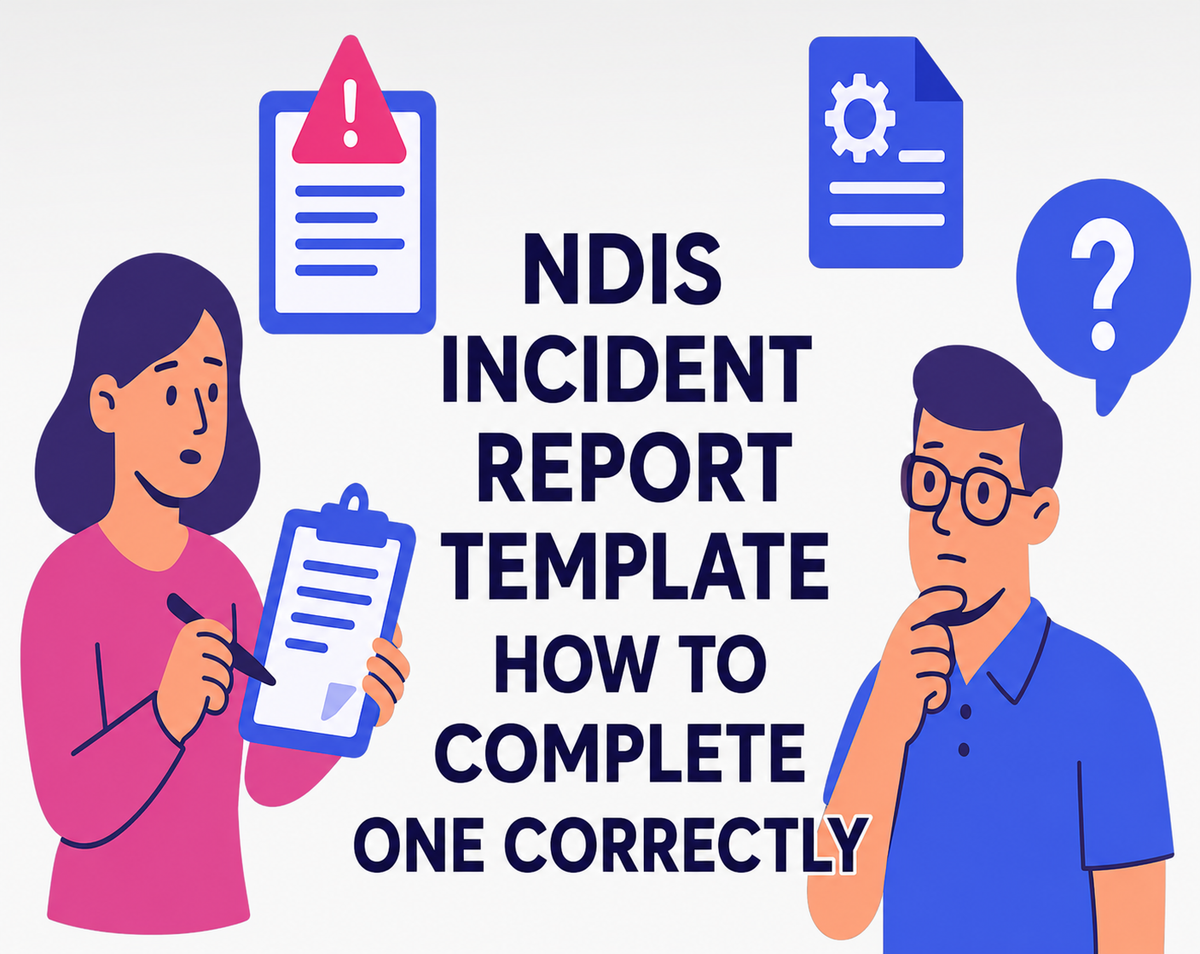
NDIS Incident Report Template: How to Complete One Correctly
When incidents occur in NDIS service delivery, proper documentation is not just important—it's mandatory. An NDIS incident report template ensures you capture all necessary information accurately and consistently, protecting both participants and your organisation. This comprehensive guide will walk you through completing an NDIS incident report template correctly, ensuring you meet all regulatory requirements and maintain compliance with NDIS Commission standards.
In this article:
The NDIS Quality and Safeguards Commission requires registered providers to report certain incidents within strict timeframes. Understanding how to properly complete an incident report is essential for every NDIS provider, whether you're dealing with a reportable incident for the first time or refining your existing processes. A well-structured NDIS incident report template streamlines this critical task and ensures you're ready when an audit comes around.
Understanding NDIS Reportable Incidents
Before completing any NDIS incident form, you must understand what constitutes a reportable incident. The NDIS Commission defines specific categories that require formal reporting, and recognising these situations is the first step in proper documentation.
Reportable incidents include:
- Death of a participant
- Serious injury requiring medical attention
- Abuse or neglect of a participant
- Unlawful sexual or physical contact
- Unauthorised use of restrictive practices
- Unexplained absence from care
Each incident type has specific reporting timeframes—some require notification within 24 hours, while others must be reported within 5 business days. Your NDIS incident report template should clearly indicate these timeframes to prevent non-compliance.
Key Components of an NDIS Incident Report Template
A comprehensive NDIS incident report template must include several essential elements to satisfy regulatory requirements. Missing even one component can result in an incomplete report that fails to meet Commission standards.
Your template should capture:
- Participant information: Name, NDIS number, contact details, and support needs
- Incident details: Date, time, location, and type of incident
- Description: Detailed account of what occurred, who was present, and immediate actions taken
- Witnesses: Names and contact information for anyone who observed the incident
- Notifications: Record of who was informed and when (family, guardians, authorities)
- Risk assessment: Evaluation of ongoing risks and preventative measures implemented
- Follow-up actions: Planned responses and investigation steps
Step-by-Step Guide to Completing Your NDIS Incident Form
Now let's walk through an NDIS reportable incident example to demonstrate how to complete your template correctly. Imagine a participant has fallen and sustained a suspected fracture requiring hospital treatment.
Step 1: Gather immediate information. Record the date and time immediately. Note the exact location and identify the incident type (in this case, serious injury). Document who discovered the incident and what immediate first aid or medical response was provided.
Step 2: Document participant details. Enter the participant's full name, NDIS number, and relevant medical information. Include any pre-existing conditions that may be relevant to the incident or treatment.
Step 3: Write a detailed description. Describe what happened in clear, factual language. Avoid speculation or assumptions. Include environmental factors, what the participant was doing immediately before the incident, and the sequence of events.
Step 4: Record all notifications. Document every notification made—to emergency services, the participant's family, your internal management, and the NDIS Commission portal. Include exact times of each notification.
Step 5: Assess and document risks. Evaluate what contributed to the incident and what immediate changes are needed to prevent recurrence. This might include environmental modifications, changes to support plans, or additional staff training.
Common Mistakes to Avoid
Many providers make avoidable errors when completing incident reports. Understanding these pitfalls helps you maintain higher documentation standards.
- Using subjective language: Stick to observable facts rather than opinions or interpretations
- Incomplete timing information: Always record specific times, not just approximations
- Missing witness details: Collect contact information from everyone present
- Delayed reporting: Submit reports within required timeframes to avoid penalties
- Inadequate follow-up: Document all investigation steps and outcomes
Best Practices for Incident Reporting
Implementing strong incident reporting processes protects participants and strengthens your organisation's reputation. Consider these best practices when using your NDIS incident report template.
Train all staff on incident recognition and reporting procedures. Regular training sessions ensure everyone understands what incidents require reporting and how to complete documentation correctly. Keep your NDIS incident form accessible to all staff members—whether that's through digital systems or physical copies in key locations.
Review incidents regularly to identify patterns and implement systemic improvements. Monthly reviews of all incidents help you spot trends that might indicate training gaps or environmental hazards needing attention.
Maintain a supportive reporting culture where staff feel comfortable documenting incidents without fear of blame. This transparency is essential for genuine quality improvement and participant safety.
Frequently Asked Questions
What is an NDIS incident report template?
An NDIS incident report template is a standardised document that guides providers through capturing all required information when reportable incidents occur. It ensures consistency, completeness, and regulatory compliance across all incident documentation.
How quickly must I submit an NDIS incident form?
Timeframes vary by incident type. Critical incidents like death, serious injury, or alleged abuse must be reported within 24 hours. Other reportable incidents require notification within 5 business days. Always check current NDIS Commission guidelines for specific requirements.
Can you provide an NDIS reportable incident example?
A reportable incident example includes situations like a participant falling and breaking a bone, experiencing unauthorised restraint, going missing from care, or reporting abuse. Any incident causing serious harm or involving potential rights violations typically requires formal reporting.
Where can I download an NDIS incident report template?
You can download a compliant incident report template through the form on this page. The template includes all mandatory fields required by the NDIS Commission and guidance for proper completion.
What happens if I miss the reporting deadline?
Late reporting can result in compliance action from the NDIS Commission, including warnings, sanctions, or registration suspension in serious cases. If you miss a deadline, submit the report immediately and document the reasons for the delay. Implement systems to prevent future late reporting.
TamCare is a mobile-first care app for NDIS providers. We help providers manage rostering, invoices, care notes, timesheets, and much more.