SCHADS Award vehicle allowance per/km increase to $1.05 - effective now
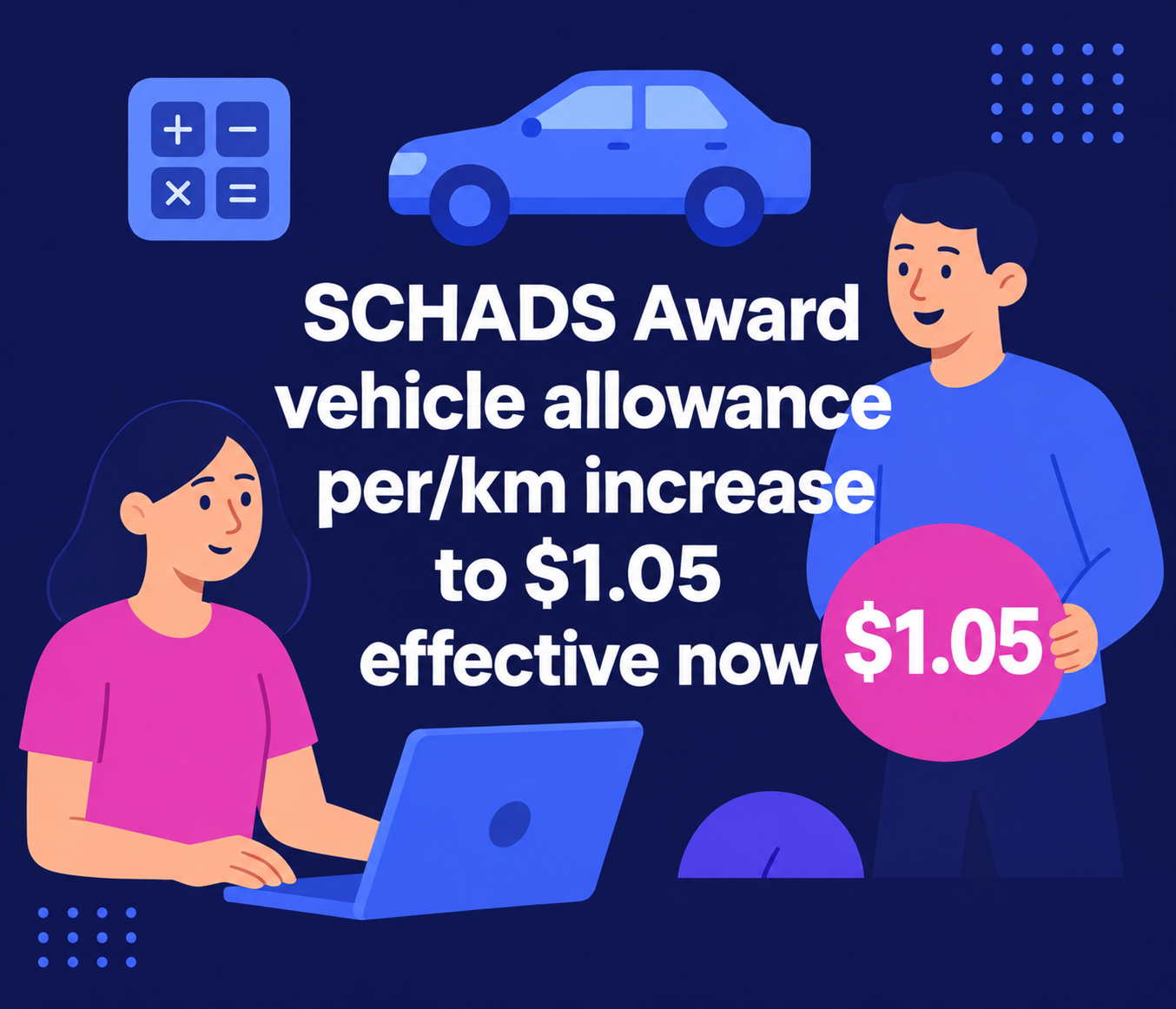
The SCHADS Award vehicle allowance has increased to $1.05 per kilometer, effective immediately. This change impacts thousands of support workers and providers across Australia, yet many remain unaware due to limited publicity. Understanding these updated rates is crucial for ensuring compliance and fair compensation for workers who use their personal vehicles for work-related travel under the SCHADS Award.
In this article:
The update to the SCHADS vehicle allowance reflects adjustments in vehicle operating costs and ensures support workers receive fair reimbursement for using their personal vehicles. Many providers have yet to update their payment systems or communicate these changes to staff, creating potential compliance issues and underpayment risks.
What Changed with the SCHADS Vehicle Allowance
The SCHADS Award vehicle allowance has been adjusted from its previous rate to $1.05 per kilometre. This increase applies to all employees covered under the Social, Community, Home Care and Disability Services Industry Award who use their private vehicles for work purposes. The change takes effect immediately and applies to all eligible travel from the effective date forward.
This adjustment recognises the rising costs of vehicle operation, including fuel, maintenance, insurance, and depreciation. Support workers who regularly travel between client locations or transport participants are directly impacted by this change and should see increased reimbursements for their work-related travel expenses.
Who Is Affected by This Increase
The updated SCHADS vehicle allowance affects a wide range of workers in the disability and community services sector. Support workers, community support coordinators, case managers, and other roles covered by the SCHADS Award who use personal vehicles for work-related travel are entitled to this increased rate.
NDIS providers must ensure all employees who claim vehicle allowances receive the correct $1.05 per kilometre rate. This includes workers who:
- Travel between multiple client locations during shifts
- Transport participants as part of their support duties
- Attend meetings, training, or other work-related appointments
- Travel from their home to client locations beyond their usual workplace
How to Calculate the New Driving Allowance SCHADS Rate
Calculating the driving allowance SCHADS payment is straightforward. Workers multiply the total kilometres travelled for work purposes by $1.05. For example, if a support worker travels 50 kilometres in a day for work-related purposes, they would be entitled to $52.50 in vehicle allowance.
Accurate record-keeping is essential for both workers and providers. Workers should maintain detailed logbooks documenting:
- Date and purpose of each trip
- Starting and ending locations
- Total kilometres travelled
- Odometer readings where applicable
Digital tools and mobile apps can streamline this process, making it easier for workers to submit accurate claims and for providers to process reimbursements efficiently under the SCHADS Award requirements.
Implementing the New Rates in Your Organisation
Providers should take immediate action to implement the updated SCHADS vehicle allowance rate. This involves updating payroll systems, communicating changes to all affected staff, and reviewing recent claims to ensure workers have been paid correctly.
Key implementation steps include:
- Updating payroll and finance systems to reflect the $1.05 per kilometre rate
- Notifying all support workers and relevant staff about the change
- Reviewing and adjusting vehicle allowance policies and procedures
- Conducting retrospective reviews to identify any underpayments
- Training finance and HR teams on the new rates
Why This Matters for NDIS Providers
Staying current with SCHADS Award changes is critical for maintaining compliance and avoiding costly penalties. The Fair Work Ombudsman actively investigates underpayment claims, and vehicle allowance discrepancies can result in significant back-payment obligations and reputational damage.
Beyond compliance, correctly applying the SCHADS vehicle allowance demonstrates respect for workers and acknowledgment of their actual costs. Support workers who feel fairly compensated are more likely to remain with their employer, reducing turnover and recruitment costs in an already competitive labour market.
Providers should also consider how these changes impact their overall cost structures and pricing models. While the increase per kilometre may seem small, it can add up significantly for organisations with large mobile workforces, potentially requiring adjustments to service delivery planning and budgeting.
Frequently Asked Questions
When did the SCHADS vehicle allowance increase take effect?
The increase to $1.05 per kilometre is effective immediately. Providers should apply this rate to all eligible vehicle allowance claims from the effective date forward. Any claims submitted at the previous rate should be reviewed and adjusted accordingly to ensure workers receive the correct driving allowance SCHADS payment.
Do all workers under the SCHADS Award qualify for vehicle allowance?
Workers qualify for the SCHADS vehicle allowance when they use their private vehicle for work-related purposes as required or authorised by their employer. This typically excludes normal home-to-work travel but includes travel between client locations, transporting participants, or attending work-related appointments during work hours.
What happens if a provider hasn't updated their vehicle allowance rates?
Providers who haven't updated to the new SCHADS Award rate may be underpaying workers, which constitutes a breach of award obligations. Affected providers should immediately implement the correct rate and conduct a review of recent payments to identify and rectify any shortfalls, including back-payment with interest where required.
Can providers pay less than the SCHADS vehicle allowance rate?
No, the SCHADS vehicle allowance rate of $1.05 per kilometre represents the minimum reimbursement for workers covered by the award. Providers can choose to pay more but cannot pay less without breaching award requirements. Alternative arrangements must still meet or exceed the minimum entitlements specified in the SCHADS Award.
How should workers track kilometres for vehicle allowance claims?
Workers should maintain accurate records including dates, locations, purposes, and kilometres travelled. Many organisations provide templates or digital tools for tracking. Odometer readings, GPS data, or mapping applications can support claims. Providers should establish clear processes for workers to submit claims and for verifying the accuracy of reported kilometres under the SCHADS vehicle allowance provisions.
TamCare is a mobile-first care app for NDIS providers. We help providers manage rostering, invoices, care notes, timesheets, and much more.