Why Small NDIS Providers Are Struggling to Stay Profitable Right Now
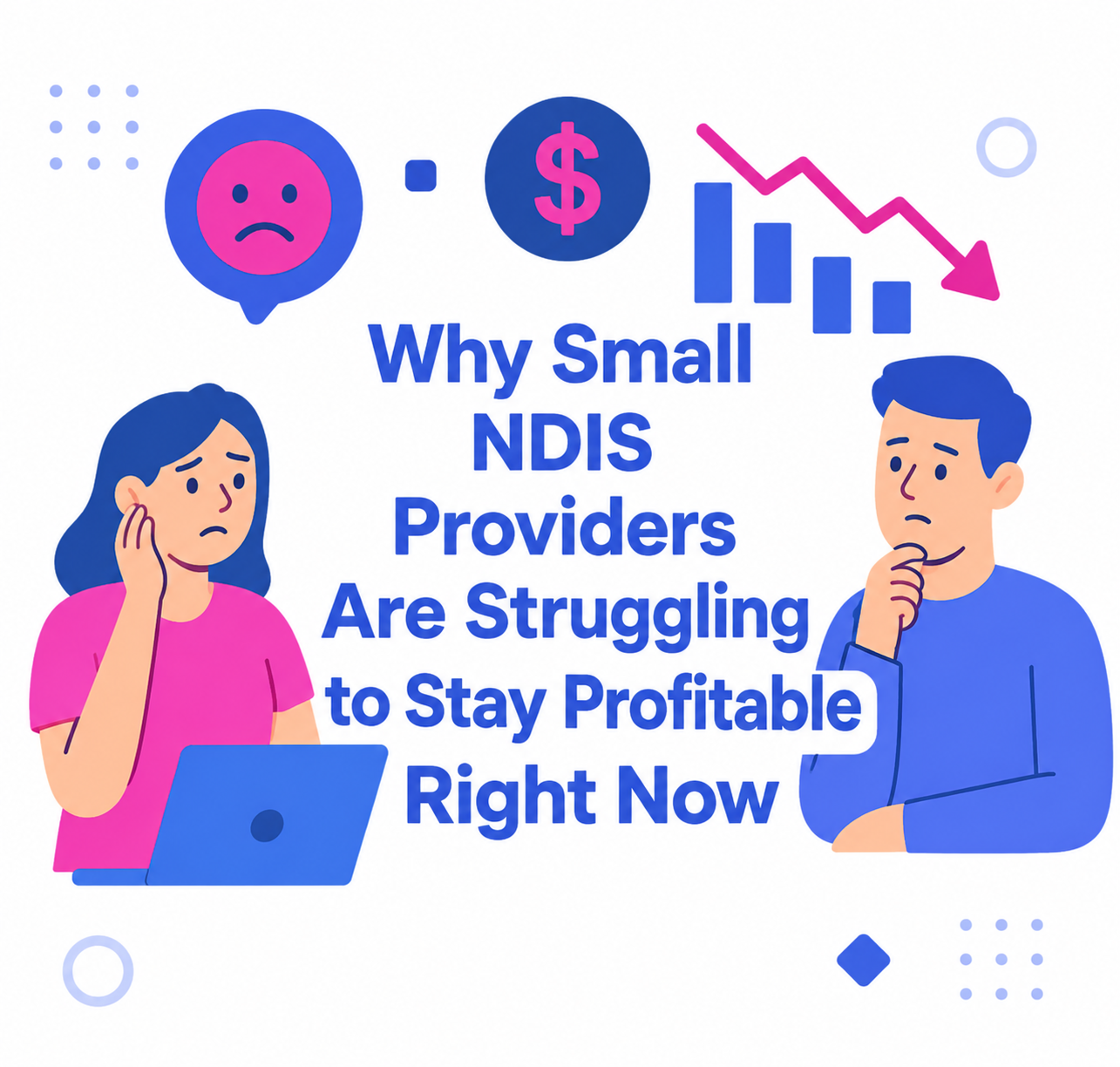
If you're running a small NDIS provider business right now, you're not imagining it—things are tougher than they've been in years. Between sweeping NDIS reforms, tighter compliance requirements, delayed payments, and rising operational costs, NDIS provider profitability challenges have never been more pronounced. You're not alone in feeling the strain, and more importantly, you're not failing. The system itself is in flux, and small providers are bearing the brunt of it.
In this article:
- How Recent NDIS Reforms Are Impacting Small Providers
- Rising Operational Costs and Shrinking Margins
- Cash Flow Challenges and Payment Delays
- The Compliance Burden That's Draining Resources
- What This Means for NDIS Provider Viability
- Strategies to Improve Profitability and Survival
- Frequently Asked Questions
The reality is that while the NDIS was designed to empower participants and create a thriving disability services sector, the policy changes and funding adjustments over the past two years have created significant NDIS business financial pressure. Understanding exactly what's causing these challenges is the first step toward navigating them strategically.
How Recent NDIS Reforms Are Impacting Small Providers
The NDIS reform agenda has brought sweeping changes to pricing, plan management, and service delivery expectations. While some reforms aim to improve quality and consistency, they've also introduced uncertainty that disproportionately affects smaller operators. Price caps have been adjusted, some service categories have been consolidated, and the scrutiny on what can be claimed has intensified.
For large providers with dedicated compliance teams and diversified service offerings, these changes are manageable. But for small NDIS provider struggling with limited staff and tight budgets, every policy shift requires immediate adaptation—often without clear guidance or sufficient lead time. The result is a constant state of reactive management rather than strategic growth.
Rising Operational Costs and Shrinking Margins
Operational costs across the board have surged. Fuel prices, insurance premiums, worker wages, and administrative expenses have all increased, yet NDIS price guides have not kept pace. When your service delivery costs rise faster than your revenue, profitability erodes quickly. This is one of the most pressing NDIS provider profitability challenges facing the sector today.
Additionally, the competitive labour market means providers are under pressure to offer higher wages and better conditions to attract and retain quality support workers. While this is positive for workers, it creates further margin compression for businesses already operating on thin financial buffers.
Cash Flow Challenges and Payment Delays
Cash flow is the lifeblood of any small business, and NDIS providers are no exception. Unfortunately, payment delays—whether from the NDIA, plan managers, or participants—are a chronic issue. When invoices sit unpaid for weeks or even months, providers still need to meet payroll, pay rent, and cover operational expenses.
This creates a vicious cycle: providers take on more clients to increase revenue, which increases costs, but delayed payments mean there's no immediate cash to cover those costs. The resulting NDIS business financial pressure can push even well-run businesses to the brink.
The Compliance Burden That's Draining Resources
Compliance requirements under the NDIS Quality and Safeguards Commission are necessary for protecting participants, but they're also resource-intensive. Audits, documentation, incident reporting, worker screening, and ongoing training all require time and money—resources that small providers often don't have in abundance.
Many small providers find themselves spending more time on paperwork than on service delivery. This administrative overload diverts focus from growth, innovation, and participant care, and it's a significant contributor to declining NDIS provider viability.
What This Means for NDIS Provider Viability
The cumulative effect of these pressures is that many small providers are questioning their long-term viability. Some are considering mergers or acquisitions. Others are scaling back services or exiting the market altogether. This consolidation may reduce participant choice and access, particularly in regional and remote areas where small providers are often the only option.
If the trend continues, the NDIS risks becoming a market dominated by large corporate providers, which may not align with the scheme's original vision of participant-driven, community-based support.
Strategies to Improve Profitability and Survival
Despite the challenges, there are strategies small providers can adopt to improve their financial position and ensure sustainability:
- Automate administrative tasks: Use care management software to reduce time spent on rostering, invoicing, and documentation.
- Streamline billing processes: Ensure invoices are submitted promptly and follow up on overdue payments consistently.
- Review service mix: Focus on higher-margin services and consider exiting low-margin offerings.
- Invest in staff retention: Reducing turnover lowers recruitment and training costs over time.
- Stay informed: Keep up with policy changes and reform updates so you can adapt quickly rather than reactively.
These steps won't solve every problem, but they can help mitigate some of the most common NDIS provider profitability challenges and buy you the breathing room needed to plan strategically.
Frequently Asked Questions
Why are small NDIS providers struggling more than large ones?
Small providers typically lack the economies of scale, dedicated compliance teams, and financial buffers that large providers have. This makes them more vulnerable to policy changes, payment delays, and rising costs. The NDIS business financial pressure hits hardest where resources are already stretched thin.
What are the biggest NDIS provider profitability challenges right now?
The biggest challenges include rising operational costs, stagnant or reduced pricing, cash flow issues due to payment delays, increased compliance burden, and uncertainty caused by ongoing NDIS reforms. Together, these factors are squeezing margins and threatening provider viability.
How can I improve cash flow as a small NDIS provider struggling with delayed payments?
Improve cash flow by invoicing promptly, following up on overdue payments, negotiating payment terms with plan managers, and using automated invoicing systems. Consider working with a finance professional to establish a cash flow forecast and contingency plan.
Is it worth staying in the NDIS market as a small provider?
It depends on your financial position, service niche, and ability to adapt. Many small providers still find the work rewarding and financially viable, especially if they focus on efficiency, automation, and high-quality service delivery. Staying informed about reforms and seeking peer support can also make a significant difference.
Where can I get updates on NDIS reforms that affect providers?
Look for resources specifically written for providers, not participants. Many industry associations, software providers, and consultancies offer reform updates, webinars, and guides tailored to the business side of NDIS service delivery.
TamCare is a mobile-first care app for NDIS providers. We help providers manage rostering, invoices, care notes, timesheets, and much more.