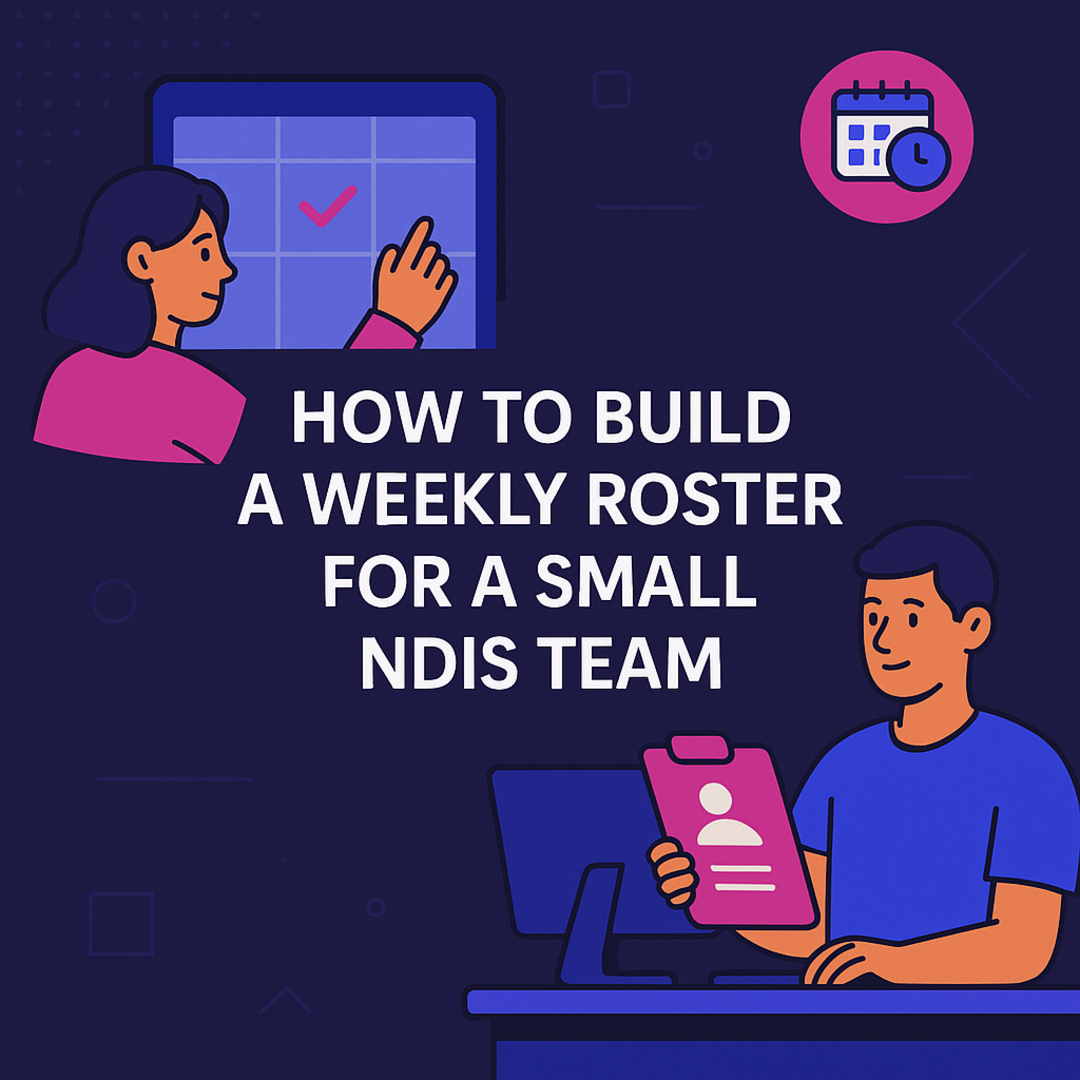
How to Build a Weekly Roster for a Small NDIS Team
Managing a small NDIS team comes with unique challenges, especially when it comes to scheduling support workers efficiently. If you're working with 2–8 staff members and building your roster from scratch, having a clear system in place can save you hours each week and reduce scheduling conflicts. This guide walks you through creating an effective NDIS roster template that fits your team's needs.
In this article:
- Why Your Small NDIS Team Needs a Roster Template
- Step 1: Gather Essential Information
- Step 2: Choose Your Roster Format
- Step 3: Map Out Client Needs and Shift Requirements
- Step 4: Assign Support Workers to Shifts
- Step 5: Build in Buffer Time and Backup Plans
- Step 6: Share and Communicate Your NDIS Weekly Roster
- Frequently Asked Questions
Creating a functional NDIS staff schedule doesn't need to be complicated. With the right approach and template, you can streamline your operations, ensure consistent client care, and give your support workers clear visibility of their shifts. Let's break down the process into manageable steps that work specifically for small teams.
Why Your Small NDIS Team Needs a Roster Template
When you're managing a handful of support workers, it might seem easier to coordinate shifts informally. However, as your client base grows, even small teams benefit enormously from having a structured NDIS roster template. A template provides consistency, reduces administrative time, and helps prevent double-bookings or missed shifts.
Having a standardized approach to rostering also ensures compliance with NDIS requirements around documentation and service delivery. It creates accountability and makes it easier to track hours for invoicing and reporting purposes.
Step 1: Gather Essential Information
Before you start building your NDIS weekly roster, collect all the information you'll need in one place. This preparation step saves time and prevents errors down the line.
- Client service agreements and approved support hours
- Support worker availability, qualifications, and preferred shifts
- Client preferences for specific support workers
- Any regulatory requirements or restrictions on shift lengths
- Travel time between client locations
- Leave requests and planned absences
Having this information documented makes it much easier to build an accurate and workable schedule that meets everyone's needs.
Step 2: Choose Your Roster Format
For small NDIS teams, you have several options when learning how to roster support workers effectively. The key is choosing a format that matches your technical comfort level and team preferences.
Spreadsheet-based templates work well for many small providers. You can use Excel or Google Sheets to create a simple weekly grid showing days across the top and time slots down the side. Color-code different workers or clients for easy visual reference.
Alternatively, specialized rostering software designed for NDIS providers can automate many tasks and reduce errors. While this involves more upfront setup, it can save significant time as your team grows.
Step 3: Map Out Client Needs and Shift Requirements
Start by plotting all your client commitments into your NDIS roster template. Mark regular recurring shifts first, then add one-off appointments or variable hours. This gives you a clear picture of your coverage needs before assigning specific workers.
Be mindful of grouping shifts logically to minimize travel time between clients. If possible, cluster clients in similar geographic areas or schedule back-to-back appointments that make sense locationally.
Step 4: Assign Support Workers to Shifts
Now comes the puzzle-solving part of creating your NDIS staff schedule. Match workers to shifts based on:
- Availability and preferences
- Required qualifications or specialized skills
- Client preferences and rapport
- Fair distribution of desirable and less desirable shifts
- Compliance with maximum working hours and break requirements
Try to maintain consistency where possible. Clients often prefer seeing the same familiar faces, which improves care quality and builds trust.
Step 5: Build in Buffer Time and Backup Plans
Even the best-planned roster needs flexibility. Build in buffer time between shifts to account for traffic delays or appointments running over. For small teams, this might mean scheduling slightly shorter shifts than the maximum to allow for variability.
Always have a backup plan for each shift. Identify which workers could cover if someone calls in sick, and document this in your template. This preparation prevents last-minute scrambling when issues arise.
Step 6: Share and Communicate Your NDIS Weekly Roster
Once your roster is complete, distribute it to your team with enough lead time. Most support workers appreciate receiving their schedule at least one week in advance, though two weeks is better when possible.
Use a consistent method for sharing rosters—whether that's email, a shared document, or through rostering software. Establish a clear process for workers to confirm they've received and reviewed their shifts. Set guidelines for how far in advance shift swaps or changes need to be requested.
Frequently Asked Questions
What should be included in an NDIS roster template?
A comprehensive NDIS roster template should include the date and day, shift start and end times, client names or codes, assigned support worker names, location or address, type of service being provided, and any special notes or requirements. You might also include contact information and backup worker assignments for each shift.
How far in advance should I create my NDIS staff schedule?
Ideally, create your roster at least one to two weeks in advance. This gives support workers adequate notice to plan their personal lives and allows time to address any conflicts or concerns. For small teams, working on a rolling two-week schedule often provides the right balance between planning ahead and maintaining flexibility for changes.
What's the best way to handle last-minute roster changes?
Establish a clear protocol for last-minute changes before they're needed. This might include a group chat for urgent coverage requests, a designated on-call coordinator, or a rotation system where different workers are responsible for backup coverage each week. Document all changes immediately in your master roster to maintain accurate records.
How can I make rostering support workers more efficient for a small team?
Start by creating templates for recurring shifts rather than building each week from scratch. Use color-coding to quickly identify different workers, clients, or shift types. Set regular times for roster planning each week so it becomes routine. Consider using digital tools that allow workers to input their availability directly, reducing back-and-forth communication.
Should I use software or spreadsheets for my NDIS weekly roster?
For teams of 2–4 staff, a well-organized spreadsheet often works perfectly fine and keeps costs low. As you grow toward 6–8 staff members or if you're managing complex scheduling with multiple clients, specialized rostering software becomes more valuable. The right choice depends on your budget, technical comfort, and the complexity of your scheduling needs.
TamCare is a mobile-first care app for NDIS providers. We help providers manage rostering, invoices, care notes, timesheets, and much more.