NDIS Audit Preparation Checklist: What Auditors Actually Look For
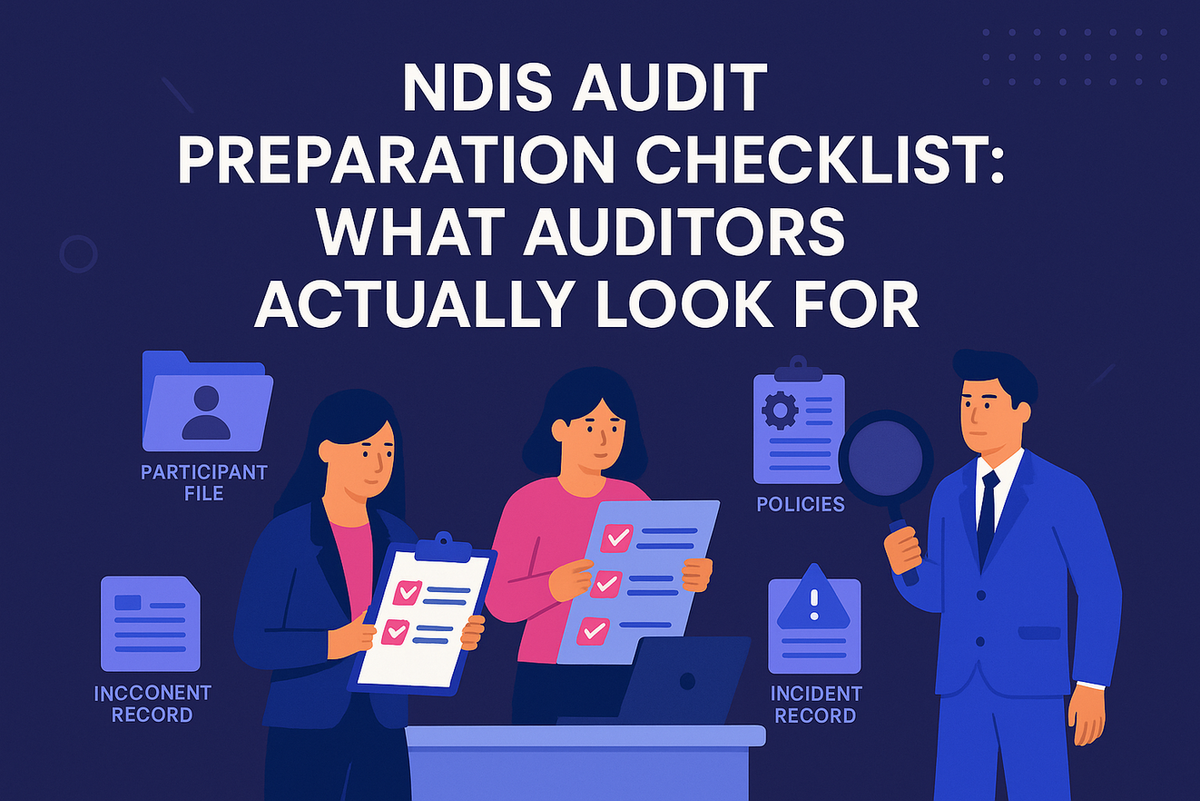
Preparing for an NDIS audit can feel overwhelming, but with the right NDIS audit preparation strategy, you can approach it with confidence. Understanding what auditors actually look for is the key to success. This comprehensive guide breaks down the essential elements auditors examine, from participant files to incident management, ensuring your organisation is audit-ready.
In this article:
When auditors arrive, they're not just ticking boxes—they're assessing whether your organisation truly upholds the NDIS Practice Standards. A successful NDIS compliance audit requires meticulous preparation across multiple areas of your business. By following this NDIS audit checklist, you'll ensure nothing falls through the cracks and demonstrate your commitment to delivering quality disability services.
Participant Files and Documentation
Participant files are often the first area auditors scrutinise. Your NDIS audit preparation should ensure every participant file is complete, current, and compliant. Auditors want to see evidence that you're delivering person-centred supports that align with each participant's goals.
Key elements auditors look for include:
- Current service agreements signed by both parties
- Detailed support plans that reflect participant goals and preferences
- Risk assessments and management plans
- Consent forms for services, photography, and information sharing
- Evidence of regular plan reviews and updates
- Communication records showing participant involvement in decision-making
- Progress notes that demonstrate service delivery matches the plan
Ensure all documentation is easily accessible, well-organised, and reflects your participants' current circumstances. Outdated or incomplete files raise immediate red flags during an NDIS compliance audit.
Worker Files and Credentials
Your workforce is your organisation's backbone, and auditors will thoroughly examine worker files to ensure everyone is qualified, screened, and trained appropriately. This is a critical component of any NDIS audit checklist.
Auditors will verify:
- Valid NDIS Worker Screening Checks for all relevant staff
- Current qualifications and professional registrations
- Position descriptions that clearly outline roles and responsibilities
- Documented induction processes for new employees
- Ongoing training records, including mandatory training completion
- Performance reviews and supervision records
- Evidence of competency in areas such as manual handling, first aid, and infection control
Create a tracking system to monitor credential expiry dates and training requirements. Expired clearances or missing qualifications are serious non-conformances that can jeopardise your NDIS audit preparation efforts.
Policies and Procedures
Robust policies and procedures form the foundation of your organisation's operations. Auditors will assess whether your policies are comprehensive, current, and actually implemented in practice—not just sitting on a shelf.
Essential policies include:
- Rights and responsibilities of participants
- Complaints and feedback management
- Incident management and reportable incidents
- Risk management and emergency procedures
- Privacy and confidentiality
- Safeguarding and protection from abuse
- Medication management (if applicable)
- Continuous improvement processes
Auditors will also look for evidence that staff are trained on these policies and that policies are reviewed regularly. Your NDIS audit preparation should include documenting when policies were last updated and ensuring staff can demonstrate their understanding.
Incident and Complaint Records
How you handle incidents and complaints reveals your organisation's commitment to continuous improvement and participant safety. This area receives intense scrutiny during any NDIS compliance audit.
Auditors will examine:
- Incident recording systems and documentation quality
- Evidence of timely reporting to the NDIS Commission when required
- Investigation processes and outcomes
- Corrective actions implemented to prevent recurrence
- Complaint handling procedures and response timeframes
- Trends analysis and systemic improvements
- Communication with affected parties throughout the process
Maintain a comprehensive incident register with detailed records showing your organisation's proactive approach to managing risks and learning from events. This demonstrates maturity in your safety culture.
Systems and Operational Processes
Beyond documentation, auditors assess your operational systems to ensure they support quality service delivery. Your NDIS audit preparation should include reviewing how well your processes work in practice.
Key operational areas include:
- Service delivery scheduling and coordination systems
- Quality monitoring and improvement processes
- Financial management and fee transparency
- Information management and data security
- Communication systems between staff, participants, and families
- Feedback collection and analysis mechanisms
- Business continuity and disaster recovery plans
Auditors may observe service delivery, speak with participants and staff, and test your systems to verify they function as documented. Consistency between what you say you do and what actually happens is crucial for a successful outcome.
Frequently Asked Questions
How far in advance should I start NDIS audit preparation?
Ideally, you should begin preparing at least 3-6 months before your scheduled audit date. This allows sufficient time to identify gaps, implement corrective actions, and gather all required documentation. However, organisations that maintain ongoing readiness through regular internal reviews will find the process much less stressful.
What are the most common reasons providers fail an NDIS compliance audit?
Common failures include incomplete worker screening checks, outdated or missing policies, inadequate incident documentation, lack of evidence of participant involvement in planning, and gaps between documented procedures and actual practice. Using a comprehensive NDIS audit checklist helps address these common pitfalls.
Can I conduct my own internal audit before the official NDIS audit?
Absolutely, and it's highly recommended. Internal audits allow you to identify and rectify issues before auditors arrive. Many providers engage consultants to conduct mock audits or use detailed checklists to self-assess against each Practice Standard requirement.
What happens if auditors find non-conformances?
Non-conformances are categorised by severity. Minor issues typically require a corrective action plan with specific timeframes for resolution. Major non-conformances may result in conditional certification or require a follow-up audit. The key is responding promptly with genuine improvements rather than superficial fixes.
How can technology help with NDIS audit preparation?
Modern care management systems streamline audit preparation by centralising documentation, automating compliance tracking, maintaining digital records of incidents and training, and generating reports that demonstrate your adherence to NDIS Practice Standards. Digital solutions reduce administrative burden while improving accuracy and accessibility of critical information.
TamCare is a mobile-first care app for NDIS providers. We help providers manage rostering, invoices, care notes, timesheets, and much more.