What Happens During an NDIS Audit? A Step-by-Step Walkthrough
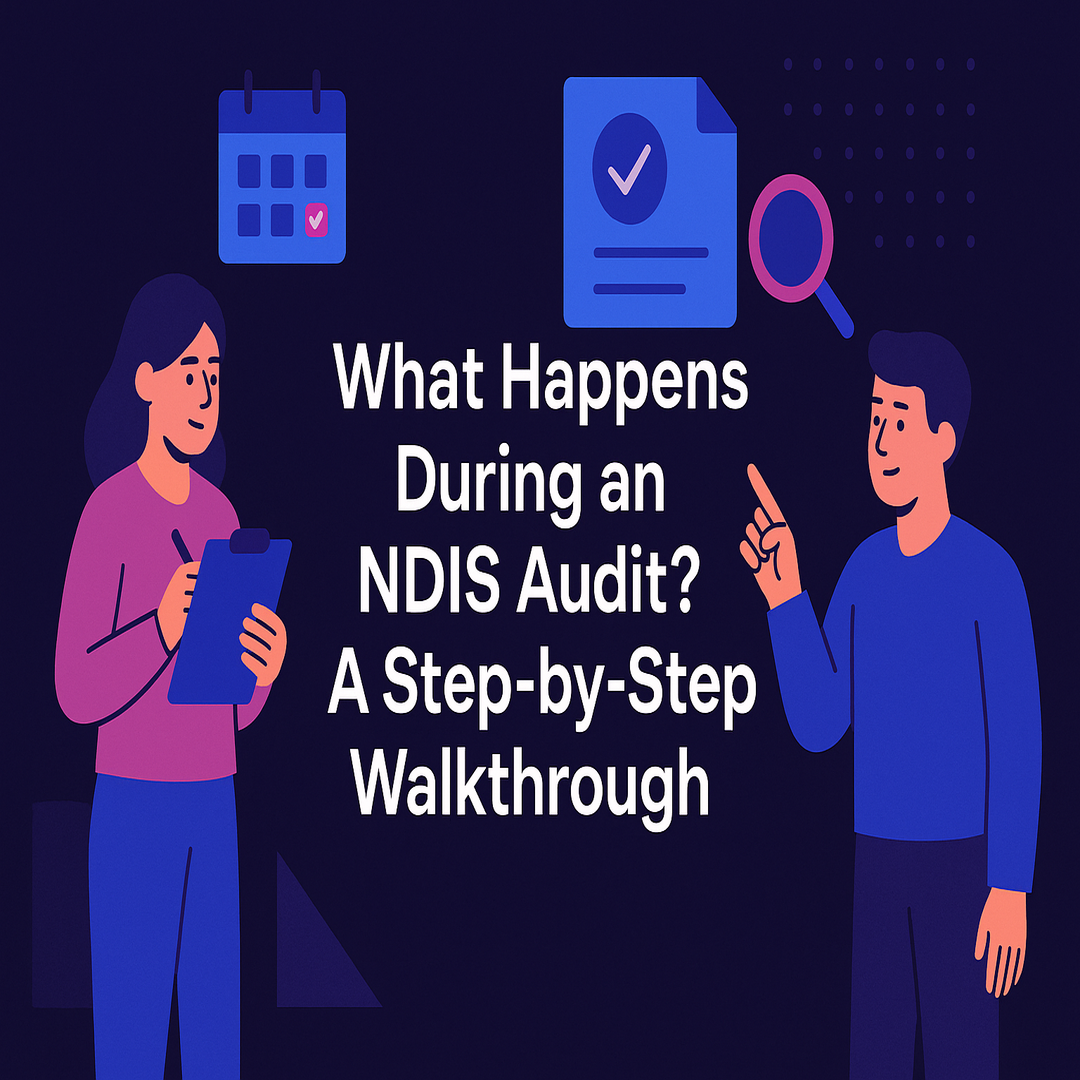
Navigating the NDIS audit process can feel overwhelming for providers, especially if it's your first time. Understanding what happens during an audit helps you prepare effectively and approach the experience with confidence. This comprehensive guide walks you through each stage of the NDIS audit process, from initial notification to receiving your final outcome.
In this article:
Whether you're preparing for an NDIS certification audit or an NDIS verification audit, knowing what to expect at each stage helps you demonstrate your commitment to quality service delivery and participant safety. Let's break down the journey step by step.
Receiving Your Audit Notification
The NDIS audit process officially begins when you receive notification from your chosen auditing body. For an NDIS certification audit, you'll typically have several weeks' notice, allowing adequate time for preparation. Verification audits may have shorter timeframes.
Your notification will include:
- The audit date and expected duration
- The scope of the audit and practice standards being assessed
- Documentation requirements and submission deadlines
- Contact details for your assigned auditor
- Information about the audit methodology
This is your cue to mobilize your team and begin gathering evidence that demonstrates your organization's adherence to NDIS Practice Standards and Core Modules.
Preparing for the NDIS Audit Process
Preparation is crucial for a successful audit outcome. Start by conducting an internal review of your systems, policies, and procedures against the relevant NDIS Practice Standards.
Key preparation activities include:
- Organizing all required documentation in accessible formats
- Ensuring policies and procedures are current and implemented
- Briefing staff members on the audit process and their potential involvement
- Preparing evidence of continuous improvement activities
- Setting up a dedicated space for the auditor to work
- Confirming participant availability for interviews if required
Using digital systems to manage care documentation, incident reports, and training records can significantly streamline this preparation phase.
The Opening Meeting
The audit begins with an opening meeting between the auditor and your key personnel. This meeting sets the tone and clarifies expectations for both parties.
During the opening meeting, the auditor will:
- Introduce themselves and explain their role
- Confirm the audit scope and schedule
- Outline the audit methodology and sampling approach
- Answer any questions you have about the process
- Discuss confidentiality and how information will be handled
This is your opportunity to provide context about your organization, highlight recent improvements, and discuss any unique circumstances the auditor should be aware of.
Document Review and Evidence Assessment
The auditor will spend considerable time reviewing your documented evidence against the NDIS Practice Standards. For an NDIS verification audit, this review focuses on specific modules, while certification audits are more comprehensive.
Documents typically reviewed include:
- Policies and procedures across all relevant areas
- Participant service agreements and support plans
- Staff qualifications, training records, and screening checks
- Incident and complaint records with evidence of appropriate management
- Quality improvement plans and outcomes
- Risk assessments and safety management documentation
The auditor will assess whether your documented systems align with the standards and whether there's evidence of actual implementation.
Staff Interviews and Observations
Beyond documents, auditors need to verify that your systems are genuinely operational. This involves interviewing staff members at various levels and, where appropriate, observing service delivery.
During interviews, auditors assess:
- Staff understanding of policies and procedures
- How workers apply quality and safety practices in their daily work
- Knowledge of participant rights and person-centered approaches
- Awareness of reporting requirements and escalation processes
- Understanding of their role in continuous improvement
Auditors may also speak with participants or their representatives to understand their experience of your services and whether their rights are being respected.
The Closing Meeting
At the end of the on-site audit, the auditor conducts a closing meeting to provide preliminary feedback. This isn't your formal outcome but gives you an initial indication of findings.
The closing meeting typically covers:
- Areas of strong performance and good practice examples
- Any non-conformities identified during the audit
- Observations that may need attention but don't constitute non-conformities
- Next steps in the audit process
- Timelines for the formal audit report
If non-conformities are identified, this is when you'll learn what corrective actions may be required.
Post-Audit: Reports and Outcomes
Following the audit, you'll receive a formal audit report detailing findings, non-conformities, and recommendations. The timeframe for receiving this report varies but is typically within a few weeks.
If non-conformities were identified, you'll need to:
- Develop and implement corrective action plans
- Provide evidence of corrections to the auditing body
- Meet specified timeframes for addressing issues
For an NDIS certification audit, successful completion results in your organization being certified for the specified period (typically 3 years). NDIS verification audit success means you've demonstrated conformity with specific modules. Both outcomes enable you to continue delivering NDIS services and build trust with participants.
Frequently Asked Questions About the NDIS Audit Process
How long does the NDIS audit process take?
The duration varies depending on your organization's size and the audit type. An NDIS verification audit typically takes 1-2 days on-site, while an NDIS certification audit may take 2-5 days. The entire process from notification to final report can span 6-12 weeks.
What happens if I fail an NDIS audit?
If significant non-conformities are identified, you'll receive a timeframe to address them through corrective action plans. The auditor will review your evidence of corrections. Certification or verification is granted once you've successfully addressed all non-conformities. In rare cases of serious issues, the NDIS Commission may be notified.
Can I choose my own auditor for the NDIS audit process?
Yes, you can select from NDIS Commission-approved auditing bodies. It's important to choose an auditor with experience in your service types and a good understanding of the disability sector. You can find the list of approved auditors on the NDIS Quality and Safeguards Commission website.
How often do I need to undergo an NDIS audit?
After initial certification, you'll have mid-term audits (typically 18 months after certification) and recertification audits every 3 years. You may also have surveillance audits depending on your registration status and the modules you're certified against. Verification audits are typically renewed every 3 years as well.
What's the difference between certification and verification audits?
An NDIS certification audit is more comprehensive and required for providers delivering higher-risk services. It assesses all Core and Supplementary modules. An NDIS verification audit is for lower-risk services and only assesses the Core module. Certification involves more rigorous assessment and ongoing surveillance requirements.
TamCare is a mobile-first care app for NDIS providers. We help providers manage rostering, invoices, care notes, timesheets, and much more.